

Burnley Truax, MPH
Eco-Healthy Child Care® Intern
Anna Consolazio, MPH
Communications, Marketing, and Design Intern
With the sun shining, flowers blooming, and bees buzzing, summer is the perfect time to spend outdoors. And did you know that spending time outside in nature can actually make children healthier? And not just children… everyone, including caretakers, can benefit!
That’s right! Spending time outdoors in nature has been shown to lower stress, anxiety, depression, anger, and sleeplessness, while improving concentration and one’s ability to fight diseases and allergies. With constant exposure to technology, being outdoors can also help us manage burnout from screen-time and help us connect to our communities.
Spending time in nature might look different for each of us depending on where we live and how close we are to public parks, trails, gardens, forests, and water bodies. If you’re interested in finding your nearest park, check out this park finder resource.
Not everyone has the same access to nature. In fact, the Trust for Public Land estimates 28 million children do not have access to quality green spaces within a 10-minute walk from their home. Marginalized and low-wealth families are more likely than affluent, white families to live in areas that are nature-deprived.
One way to improve equitable access to nature is to direct funding for parks and natural areas to communities that have historically had fewer resources and opportunities. It’s important that these projects are community‑lead. Check out the River Network’s equitable green infrastructure toolkit to learn more about this approach.
What are ways we can engage children outside?
Caregivers can engage children in nature outside through many different activities, such as:
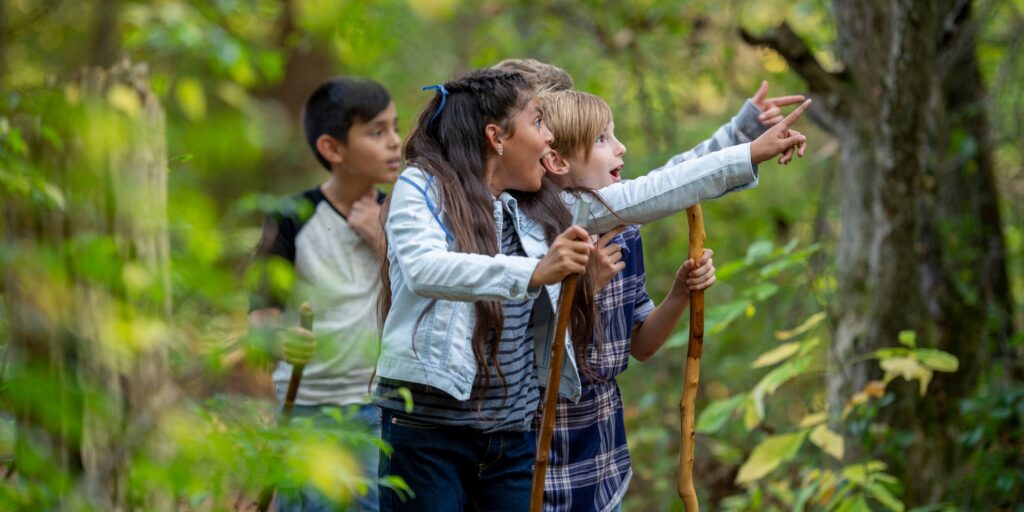
- Going on a walk, letting children explore, and asking them about what they see, smell, and hear.
- Playing “I, Spy.” or pretending to be different animals, trees, or objects – see where their imagination takes them.
- Encouraging kids to build, dig, and experiment with dirt, sticks, water, and fallen leaves. Suggesting the idea of building a mud kitchen!
Aim to spend 5 to 30 minutes a day performing these activities when you can. Depending on how old the child is, ask them how they feel when being outdoors. Being outdoors engages our ears, smells, sight, and curiosity. Being able to describe how they feel is a great communication skill to begin building.
Safety Tips for the Great Outdoors
Before venturing outside with kids, it’s important to take some precautions. Check out EHCC’s resources on Tips for Sun Safety and Tips for Keeping Bug Bites Away. And, it’s important to check your outdoor air quality. If the air quality is Code Orange (unhealthy for sensitive populations such as children) or above, it’s best to find another indoor activity and to keep children inside.
Infants often put dirt in their mouths. To avoid accidental ingestion of dirt which may have levels of lead and heavy metals, monitor young children and remind them to wash their hands after coming back from playing in the dirt.
Once these precautions are taken…breathe in, breathe out, and let the outdoors work its medicine!