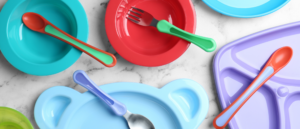

Using plastic dishware comes with the uncertainty of not knowing which chemicals or how many microplastics are leaching out of the plate or bowl and into your food. Plastic products break down into tiny particles which we are exposed to through our environment.
So if we shouldn’t use plastic, what materials are safe for children?
Recommended Non-Plastic Alternatives
First up: Glassware
At first you might think: “glassware and kids, particularly infants, do not go together!” You are correct. Most kids are high-energy and rambunctious, and still learning spatial awareness; they may be at odds with a glass dish.
Good news! There’s glass dishware designed with kids in mind. By applying stronger glass (e.g, Duralex) that is more durable and adding a silicone sleeve that can suction to the table, there are now kid-friendly options for glass dishware.


Glass dishware with silicone bottoms and sleeves.
Glass beats plastic in longevity, durability, and sustainability. It’s non-porous, so it does not absorb odors, stains, or bacteria, and it’s resistant to changes in temperature. This makes glassware microwave and dishwasher-safe for the product and for us! And, it’s a great option for storing food, particularly if you want to bring a lunch to work and heat it up chemical-free. For baby bottles specifically, a tempered glass bottle with a silicone sleeve and nipple is the best choice for safety and longevity.
We recommend using tempered glass when choosing glassware products, as it is the most durable and non-leaching. Some decorative or painted designs on glassware, particularly vintage glasses, can contain lead and cadmium paint, so avoid these products. Also if glassware is chipped or damaged, discard it.
The drawback of glassware compared to plastic is the up-front cost, but when you total up durability, longevity, and non-toxic chemical leeching, glassware is one of the best options.
Next Up: Stainless Steel
Stainless steel is another common alternative to plastic. It is lightweight and non-toxic. It’s very durable and 100% recyclable, which makes it a far more sustainable option than single-use plastics.


Stainless steel dishware
Most importantly, stainless steel (specifically food-grade (304,18/8)) does not leach chemicals. It is also odor-resistant, portable, dishwasher safe, and does not stain.
Stainless steel is one of the most expensive options for plastic alternatives, but provides durability, longevity, and less-leaching of toxic chemicals.
Stainless steel dishware is often paired with a silicone lid, or sleeve on the bottom of plates, bowls, and handles. These silicone sleeves keep the bottom of plate or bowl a consistent temperature, allows dishware to suction to surfaces, and provides a smooth handle for children using stainless steel silverware.
Two important things to know when using stainless steel:
- Avoid prolonged contact with acidic foods such as juices, tomatoes, and citrus fruits. While generally non-reactive, acidic foods can damage the surface of stainless steel, impart a metallic taste to foods, and in extreme cases, cause heavy metals to transfer to food.
- Do not microwave! Stainless steel reflects microwave energy instead of absorbing it (like plastics), and this can lead to sparks, warping of the metal, and even fires.
Next Up: Ceramics and Porcelain
Perhaps similar to glass, you may be nervous to think about children handling ceramic or porcelain, but there are kid-friendly options! Some porcelain bowls come with a silicone bottom base that protects dishware and kids from accidental (or intentional) falls.

Porcelain dishware set with silicone bottom
High-quality, food-safe glazed ceramics and porcelain are great alternatives to plastic since they are a thermal-resistant clay option. Though porcelain is more durable than ceramic, both outlast plastic and are also highly resistant to temperature changes, making them a great option for storing food or heating it up.
When using ceramics or porcelain, avoid vintage (older) or imported items, as these are more likely to contain lead or cadmium in the glazes or decorative paint. Make sure your products are FDA or Prop 65 certified products labeled “lead-free”, “cadmium-free”, and “food safe” and come from reputable manufacturers.
Porcelain and ceramic is one of the most expensive plastic alternatives, but provides more longevity, durability, and less-leaching of toxic chemicals compared to plastic.
Glassware, stainless steel, and ceramics and porcelain are all great alternatives to plastic. This dishware is often paired with silicone sleeves to protect children from hot food and beverages and helps protect the dishware from falls. These are the most expensive plastic dishware alternatives, but they offer the most durability and longevity. Since these products last a long time, you might only need a couple plates, cups, bowls compared to buying multiple plastic sets. These alternatives last, and most importantly, protect children’s health.
Next up, some cheaper options, including silicone and bamboo.
For more information about why plastic products should be avoided, read EHCC’s Fact Sheet on Plastics, EHCC FAQs on Safer Food Packaging:BPA and Styrofoam: Safer Alternatives and EHCC Blogs on Microplastics and Melamine.