
You’ve heard it time and time again: Use less plastic!
Plastics have made their way into just about every aspect of our lives, including the food we eat, water we drink, and the products we use.
Many children’s diningware, cups, silverware, and bottles are made from plastics, which can contain harmful chemicals, like bisphenols (e.g. BPA, BPF, BPS), per- and polyfluoroalkyl substances (PFAS), melamine, and even flame retardants. Scientists are still researching the full extent of health impacts caused by plastics, but there is enough evidence to suggest that plastics have harmful health effects. The following adverse health effects have been found to be related to plastics exposures: cancer, diabetes, obesity, infertility, kidney dysfunction, and behavioral problems.
Chemicals added to plastic and the tiny pieces that they break down into, known as microplastics, can ‘leach’ or leak out of plastic and into our food and beverages. There are specific instances where this is more likely to occur, like when the plastic container is used to hold hot or acidic foods. To prevent exposures from chemical leaching, you can take several actions:
- Throw away plastic products once scratches are visually apparent
- Avoid microwaving plastic and washing plastic in the dishwasher
- Do not pour hot liquids or hot food into a plastic container
- Avoid drinking or eating acidic drinks and foods (e.g., lemonade, OJ or tomato sauce) in plastic containers.
Are some plastic products better than others?
There are many types of plastic used in children’s dishware and not all of them contain the same harmful chemicals.
Polycarbonate (PC)
Some plastics, like polycarbonate (PC), will contain bisphenols (BPA, BPS, or BPF). Even if these products say they are BPA-free, there is likely another bisphenol added as a substitute, such as BPS or BPF. Scientists have found that these substitutes have similar hormonal effects to BPA, and they should be avoided. PC plastic has recycling number #7.
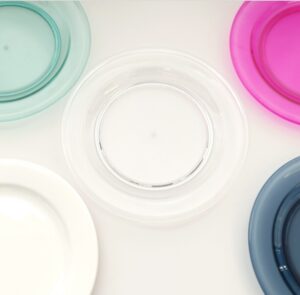
Polycarbonate plastic plates
Styrene Acrylonitrile Resin (SAN)
A common type of plastic found in child care settings is styrene acrylonitrile resin (SAN). This plastic is a combination of styrene ( ie., styrofoam) and acrylonitrile. Both chemicals individually have probable cancer causing effects; however, when these chemicals are linked together there is not as much of a concern. The Food and Drug Administration regulates dishware in the US; SAN is regulated to ensure safe levels are used in dishware. However, more research needs to be done. Scientists in Japan have found volatile levels of these chemicals in higher amounts than recommended by the FDA.
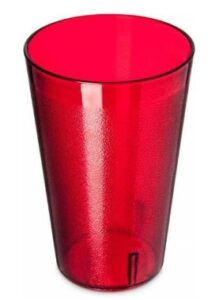
Styrene acrylonitrile resin (SAN) plastic tumbler cup
SAN plastic also has the #7 recycling number. These products are more durable than PC plastic and will not have bisphenol additives added to them; however, it is difficult to tell the difference between SAN and PC plastic products. For instance, there are two water pitchers in the image below. They look nearly identical. The pitcher on the left is made with SAN plastic while the pitcher on the right is PC plastic. SAN plastic is more rigid and will likely crack or chip compared to PC plastic that will likely bend before it breaks. Secondly, SAN plastic can have a faint colorful tint compared to PC plastic being more clear.
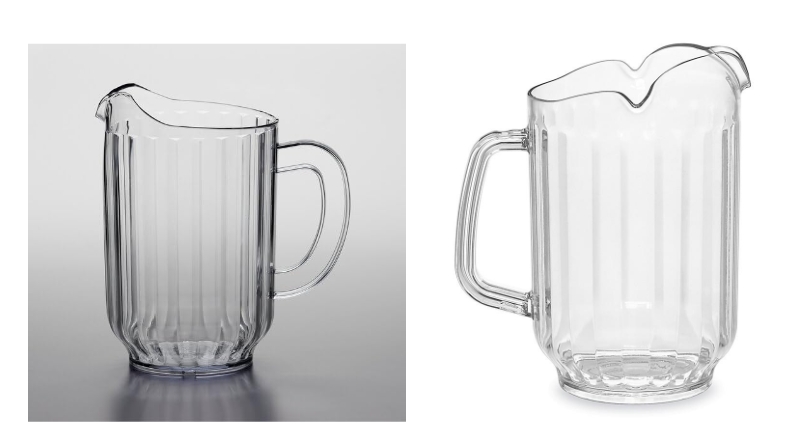
Two nearly identical beverage pitchers. The pitcher on the left is made with SAN plastic and the pitcher on the right is made with PC plastic.
High-Density Polyethylene
Two other types of plastic on the children’s dishware market are polypropylene (PP) and high-density polyethylene (HDPE). Both of these plastics will also not have bisphenol additives added, so no need to look out for BPA-free labels. These plastic dishware products are opaque, rigid, and have a more matte or waxy texture. The easiest way to tell PP and HDPE plastic from other types of plastic is by the recycling number on the bottom of the product. PP plastic is #5, and HDPE is #2.
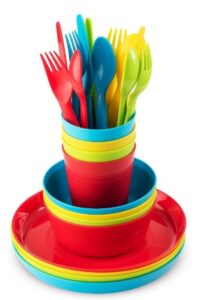
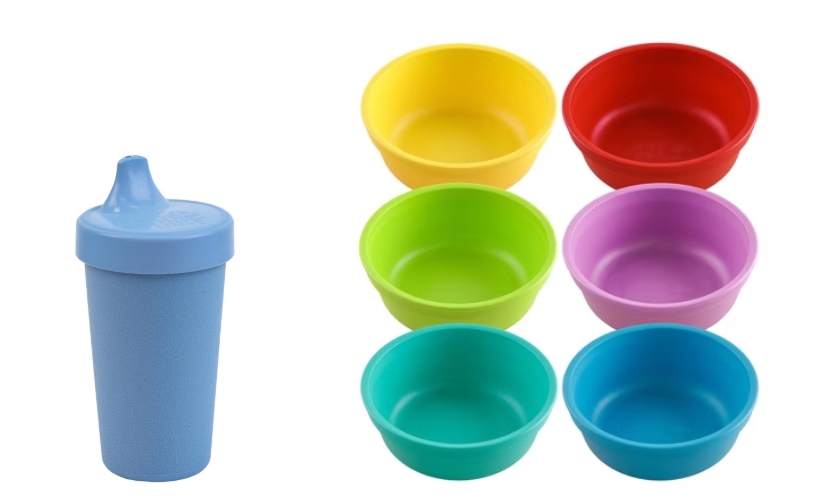
Polypropylene (PP) plastic dish set High-density polyethylene (HDPE) plastic sippy cup and bowls.
How can I tell what chemicals are in my dishware?
As a first step to avoiding products containing these harmful chemicals, look for “BPA-free,” “PFAS-free”, “PVC-free”, “phthalate-free” or “melamine-free” labels. These labels may be found on either the external ‘new’ packaging of a product, on the underside of the products themselves, or within the “materials” description of product information, if shopping online.
However, certain plastics might not have these “chemical-free” labels because that specific plastic wouldn’t inherently use that chemical. In other words, certain plastics use a different combination of chemicals, so labeling is a great start, but not foolproof.
As a second step to avoiding these unsafe plastics, check the recycling number on the underside of the product. This information is also on the “materials” description of product information, if shopping online. If the recycling code is #7, be aware that you might be using a plastic product made of PC plastic, which will contain bisphenol additives, like BPA, BPS, or BPF. Plastic products that are clear (even if the item is colored and clear – such as a red soda cup), hard and inflexible, might be PC or SAN plastic.
What about other single-use dishware, like styrofoam or paper plates?
Polystyrene, or styrofoam, is a plastic used in food containers and a possible carcinogen. Currently, the Environmental Protection Agency is considering the health effects of styrene in consumer products. Similar to other chemicals used in plastic, styrene can leach into food and drinks when they’re hot, oily, or acidic.
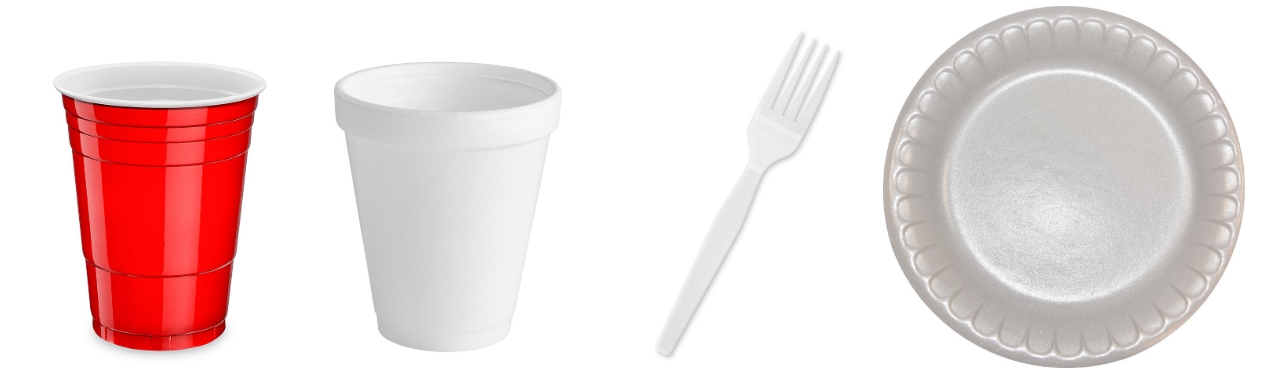
Polystyrene cups, fork and plate
Paper
Some paper plates have been reported to contain a coating of PFAS, a class of “forever chemicals” that are stain and grease-resistant. While PFAS may make paper plates less soggy, they come with a range of health effects that scientists are currently researching, like cancer and thyroid disruptions. For examples of alternative paper plates that don’t have PFAS coating, check out Toxic Free Future’s resource. 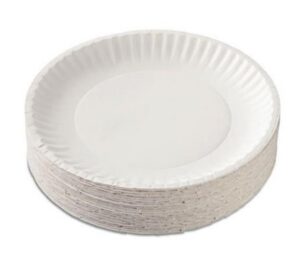
Paper plates advertised with grease resistant coating, which is likely PFAS
If you need to choose disposable plates, keep in mind that some of these products are simply marketed as “biodegradable” or “eco-friendly”, but may not actually be compostable. These labels can help you make a selection that is actually compostable:
- Certified Compostable through Biodegradable Products Institute (BPI) or Compost Manufacturing Alliance (CMA)
- PFAS-free
- ASTM D6400 and D6868 compostability standards
If possible, avoid plastic dishware products altogether!
In addition to the possible chemical exposures, these plastic products pose another concern as they break down into smaller pieces known as microplastics. Microplastic have been found to have a range of health effects, including lung cancer, asthma, fatigue and dizziness, inflammatory bowel disease, among others. But, how are we supposed to reduce purchasing plastic when it’s everywhere and typically the most affordable option? … stay tuned as we look at the alternatives!
For more information about why plastic products should be avoided, read EHCC’s Fact Sheet on Plastics, EHCC FAQs on Safer Food Packaging:BPA and Styrofoam: Safer Alternatives and EHCC Blogs on Microplastics and Melamine.