

In previous blogs, we’ve discussed the health effects of using plastic dishware and reviewed several plastic alternatives, like glassware, stainless steel, porcelain and ceramics. These alternatives can be costly and out of one’s budget. Let’s review some more affordable plastic dishware alternatives, including silicone and bamboo, to better understand various options on the market.
Recommended Non-Plastic Alternatives
First up Silicone:
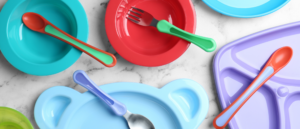
Silicone is a popular replacement for plastic within cooking utensils and kids’ dishware.
 Silicone plate
Silicone has a moldable and rubbery texture that is great for little ones who are still in the throwing (or dumping!) phase. It’s very durable and has a low chance of leaching chemicals. We advise only using medical or food-grade silicone. Low-quality silicone may contain unhealthy fillers that can transfer into food or drinks over time.
Silicone is often paired with other dishware materials, like glass, stainless steel, and ceramics, providing a protective base, smooth handle, and a base that suctions to surfaces.
While plastic options will most often be the cheapest on the market, silicone products are one of the most affordable plastic alternative dishware options.
Next Up: Bamboo
Bamboo dishware can be a great alternative to plastic, however, it requires paying close attention to the “materials” section within the product listing.
There are two distinct types of bamboo dishware: 100% natural bamboo products and bamboo-fiber composite products, which use melamine, a plastic resin.
The bamboo that is 100% natural is a good choice as it is made from the outer layer of bamboo plants (without harming the plant itself). Bamboo plates and silverware are great for occasions where single-use options are preferable (like birthday parties or picnics) as bamboo is compostable, biodegradable, lightweight, and durable. Bamboo dishes can also be reused after gently washing with soap and warm water.
When searching for bamboo dishware, you will most likely see options that use bamboo-fiber composite products, which use melamine as a binder for bamboo fibers. Since melamine is a type of plastic product, these products are not biodegradable, regardless of if the product lists it as ‘food-grade melamine’.
One way to tell if a bamboo product has melamine or not is by the cost. Oftentimes, products with melamine will be cheaper. Note that bamboo products will either specify if melamine is added as an ingredient in material description, list the product as melamine-free, or will not specify whether melamine is added or not.
Based on the products below, can you tell which two of these bamboo plates have melamine?

All of these plates are advertised as bamboo. The adorable bear plate (upper left) is advertised as having melamine. The spotted circular plate (upper right) advertises the plate as non-toxic, however, melamine is used to glue the bamboo fibers. The plates on bottom state they do not use melamine. The cloud shaped plate (lower left) has a silicone suction bottom to help stabilize the plate on the surface. The square plate (lower right) is certified compostable through Compost Manufacturing Alliance (CMA).
So next time you notice a tear in your plastic plate, consider leaving plastics in the past, and turn to more sustainable, safe, and long-lasting products in the future. Making small swaps creates a safer meal, and more importantly, safer overall health.
For more information about why plastic products should be avoided, read EHCC’s Fact Sheet on Plastics, EHCC FAQs on Safer Food Packaging:BPA and Styrofoam: Safer Alternatives and EHCC Blogs on Microplastics and Melamine.